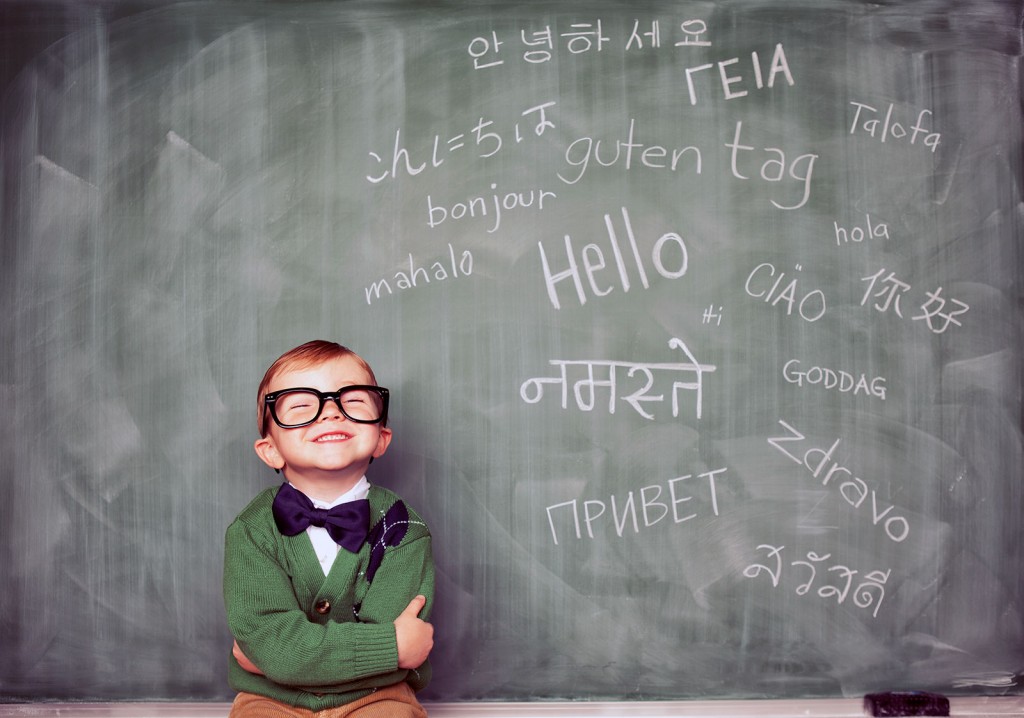
S.O.S ! My child parle en Franglish
Brief overview on perks and quirks of raising a bilingual child
Parenting 101
« Je veux play in the jumpoline maman! »
(I want to play on the trampoline mom!)
-a 4-year old boy shouted, while pointing at a trampoline on the playground.
It was a rather funny and cute scenario to witness. A kid and a ‘jumpoline’, and me reflecting critically about my own plurilingual childhood.
Still, what on earth is a jumpoline?
The word trampoline is both a French and English word. So we could think of ‘jump’ as an attempt from our little english learner to englishize the word trampoline, and ‘jumpoline’ as a result of a modeled translation.
In this context, the utterance ‘je veux..’ (I want) is a typical request a parent would get from their child. Whereas ‘.. play’ might be used more frequently outside with english-speaking peers.
.. but to be fair with this little one, the whole thing still makes sense.
The Disfluent Speech
Growing up, I remember that the richness of my vocabulary in a language was very context-dependent. For example, I would use one language while playing and learning in school, but another at home. I would often have trouble switching languages and would mix them up whenever it felt appropriate, sometimes all in one sentence.
Now, how was I able to overcome funny invented expressions?
Research has shown that the frequencey of ungrammatical utterances were dependent on how actively parents corrected a child’s speech, as well as how they correct it. It was observed that parents tend to not correct syntax or grammar when the utterance “makes sense”. That’s interesting, because explicitly correcting and pointing out to the child syntax or grammatical errors has proven to be effective in limiting grammar errors. Furthermore, those children displayed faster vocabulary formation, better eye-contact and more complex word combinations. They also paid more attention to the proper grammar displayed by their parents and tended to imitate them more. *
Disfluent speech may feel common in bilingual children who are believed to be “confused” by the dominant language at school or with peers. However, a study published by the University of Texas demonstrated no difference in stuttering and frequency of disfluent speech when comparing monolingual and bilingual children. *
So, no more fallacious causal-effect, right?
A Mishmash of Languages
“Je vais cleanuper la table !”
(I will clean-up the table)
-said the little boy.
Once again, another original sentence by that same little boy, this time during snack time at the park.
Some characteristics of bilinguilism may be scary, but it is important to mention that the mix-up of languages such as Franglish in early childhood of bilingual children is common and a normal part of language formation.
On average, English language learners in kindergarten show no difference in vocabulary reception. They may score lower in vocabulary tests but it was demonstrated that with language exposure from peers and social interactions at school, the gap was closed very quickly.
However, it was observed that less attention seems to be given to young English learners who are expected to score lower on language tests by instructors, which could lead to more challenges for bilingual children. This means that parents may need to be more mindful of the child’s learning conditions. Specifically in academic settings that benefit rather than disadvantage dual language competence, as the quality of the learning environment in early school years often predicts success at school and dual fluency. *
A mishmash of words can happen when a child tries to fill in the gap, and a lot of the times, children may even conjugate an English word using conjugation rules from their native language and vice-versa.
Above all, bilinguilism is never a disadvantage for language learning in children. There is no physiological difference in your child’s brain and that of their monolingual peers. Most importantly, there is no scientific evidence that children with developmental disorders impair dual language learning and those bilingual children do not display more challenges than monolingual peers under the same developmental disorders. Bilinguilism is believed to actually be beneficial to those children and research suggests that parents who are not fluent in the dominant language at school or outside, are encouraged to speak their minority language at home. *

The Myths and Legends
« My child was completely silent on his first preschool day. »
Replied the mom.
The silent period of bilingual children should not be confused with selective mutism.
It is typical and frequent that the child goes through a non-verbal, or “silent period » at school, especially when newly exposed to a language. Not being fully comfortable in a language is normal and should not be interpreted as failure to speak, as it takes an average of over 6 months to feel at ease. *
What is observed is that slowly, the child starts to reiterate words in the new language. Your child may even start to learn “underground”, which is using social speech to speak to themselves and practice alone, which then leads to the child “going public” with the new language. *
One other explanation of the silent-period comes from the fact that not only newborns prefer their mother’s voice, but they also show more interest in the native language they were exposed to in the womb. *
There is an important socio-emotional context to take in account when it comes to languages and social learning during childhood. Infants tend to recognize language cues very accurately, and even when being exposed to different tunes, 6-month-old toddlers are able to discriminate and listen longer to a tune by a native speaker. This evolutionary sense of familiarity predisposes children to show preferences in interaction when it comes to caregivers or social group. *
With that being said, it does happen that children answer parents in other languages.
It is normal for children to feel less excited to use their native language. Naturally, those kids want to relate to their peers and can develop preferences for the dominant language at school, to feel like they fit in. If this your case, linguistics experts encourage parents that believe in teaching the child a native language to not lose motivation and persist speaking their language at home regardless. *
Parents Can Get Very Creative ..
Environmental influences on the child’s second language acquisition are not restricted to academic settings such as school, as the role of parents and caregivers play an equal role.
There is a correlation between the socio-economical status of a caregiver and its vocabulary in their native language. Both SE and parent’s vocabulary have a strong impact on how well a child grasps onto a new language and are good predictors on the child’s vocabulary formation in that new language. Researchers have observed that children whose parents have higher variability in native language abilities, display higher English skills themselves. *
It is okay if as a parent, you are unsure on how to approach your child’s bilinguilism. Various techniques have been developed to explain how parents can help their bilingual child improve their language acquisition. Some examples are:
One person one language (OPOL): to ensure less confusion through consistency and enough exposure to a language if each person is assigned a language to interact with the child.
Minority Language at Home (ML@H): this is when parents or caregivers speak with the child at home predominantly in their native language.
Each caregiver will have their own preferences so do not hesitate to try different methods before finding the right groove.
Better Safe Than Sorry
Lastly, remember that a bilingual child is almost always more advantaged than monolingual peers. Kids growing up in a multilingual environment have better attention span and focus more easily on tasks. Moreover, dual language competency was proven to influence neuroplasticity and is correlated with an average 4-year delay for Alzheimer’s and dementia. *
If you are raising a bilingual child, know that he will one day be thankful to have the ability to communicate with family and relatives from their native from, flexibility with travelling and communicating with locals, as well as better job opportunities.
If after this you still have any lingering doubts, never hesitate to seek advice from a professional.
« Merci very much! »

 Parenting 101